


In the rapidly evolving landscape of 2026, industrial and municipal lighting has shifted from a basic utility to a critical pillar of smart-city infrastructure and corporate sustainability. As global energy costs fluctuate and environmental regulations tighten, the “standard” LED is no longer enough. This Industrial LED Lighting Guide 2026 serves as a definitive resource for engineers, municipal planners, and B2B procurement specialists looking for high-performance solutions. Decision-makers now demand High-Efficacy (HE) systems that offer long-term financial recovery and technical resilience, and this guide explores how to achieve that.
1. The Science of Efficiency: An Industrial LED Lighting Guide 2026 Perspective
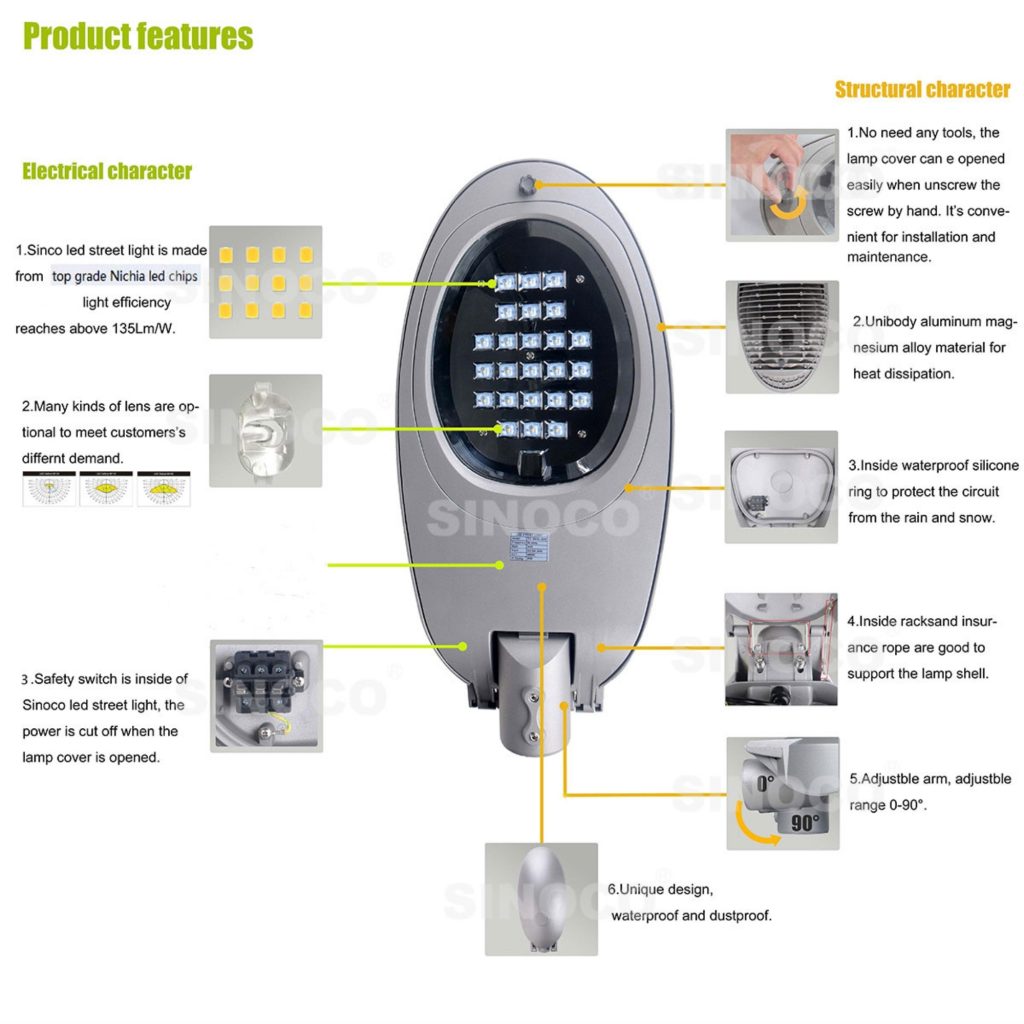
To understand the future of illumination, we must look at the physics of luminous efficacy. For decades, the industry was satisfied with 100-120 lm/W. However, the 2026 standard has moved toward the 180lm/W to 200lm/W breakthrough.
High-efficacy chips, such as those developed in partnership with Nichia and Cree, do more than just produce brighter light; they manage energy more intelligently. By converting a higher percentage of electrons into photons rather than waste heat, these systems protect the internal LED driver and extend the luminaire’s lifespan to over 100,000 hours.
2. Thermal Management and Material Integrity
A primary “Information Gain” factor in this guide is the focus on ADC12 High-Pressure Die-cast Aluminum. In extreme industrial environments, thermal dissipation is the difference between a 2-year failure and a 10-year success.
The Engineering of Heat Sinks
Our heat sink designs utilize vertical convection fins. This prevents “dust blanketing,” a common cause of thermal runaway in industrial LED fixtures. By maintaining a lower junction temperature, we ensure that the L70 lumen maintenance remains stable for over a decade.
3. The Urban Infrastructure Problem: ST-52 and ST-SA Series
Municipalities face the dual challenge of reducing carbon footprints while increasing public safety.
- ST-52 Series (The Infrastructure Workhorse): Specifically designed for highways and major arteries, the ST-52 series utilizes Type II and Type III optical distributions. This creates superior photometric uniformity, ensuring that light is directed precisely onto the roadway with zero upward waste.
- ST-SA Series (The Smart-City Hub): In 2026, a street light is also a data point. The ST-SA series is equipped with NEMA/Zhaga sockets, allowing for LoRaWAN or Zigbee smart-nodes. This enables auto-dimming based on traffic density, reducing energy waste by an additional 30%.
4. Industrial and Warehousing: High Bays & Gas Stations
The internal lighting of a facility affects both safety and productivity. Our LED High Bay solutions are engineered with high Color Rendering Index (CRI) and zero-flicker technology to reduce worker eye strain.
For specialized environments like gas stations, the ST-GS series focuses on “Visual Comfort.” By using recessed optics and anti-glare reflectors, we ensure that drivers have high visibility without the “blinding” effect often found in cheaper LED retrofits.
5. Specialized Innovations: From Horse Therapy to Horticulture
Diversity is a key signal of E-E-A-T. SINOCO’s expertise extends into specialized bio-photonics:
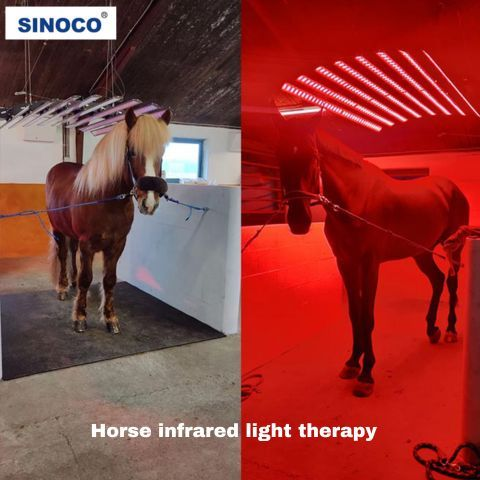
Horse Red Light Therapy
Using specific wavelengths (660nm and 850nm), our therapy pads stimulate cellular ATP production. This isn’t just a product; it’s a biological solution for equine recovery.
Horticulture Grow Lights
Modern indoor farming requires specific PPFD (Photosynthetic Photon Flux Density) levels. Our grow lights provide a full-spectrum “light recipe” that mimics natural sunlight while minimizing energy consumption.
6. The 2026 Buyer’s Checklist: Evaluating OEM Manufacturers
If you are sourcing from a China-based manufacturer, your internal audit must include:
- Technical Certifications: ISO9001, ISO13485 (Medical), and ISO14001.
- Product Compliance: TUV, ENEC, CB, CE, and RoHS.
- Third-Party Lab Reports: Ask for LM-79 and TM-21 data to verify lifespan claims.
7. Strategic ROI Analysis: SINOCO vs. The Market
| Feature | Traditional HID/HPS | Standard LED (2022) | SINOCO High-Efficacy (2026) |
| Luminous Efficacy | 70 lm/W | 140 lm/W | 180 – 200 lm/W |
| Energy Savings | Baseline | 50% | 85% |
| Surge Protection | 2KV | 4-6KV | 10-20KV Standard |
| IoT Compatibility | None | Limited | Full Smart-City Ready |
8. Solving the “Dark Sky” Compliance Problem
One of the most significant problems for end-users today is light pollution. This Industrial LED Lighting Guide 2026 advocates for “Dark Sky” compliant fixtures. By using U0 (zero up-light) optics, we protect the nocturnal environment while providing maximum safety on the ground.
9. Frequently Asked Questions: Industrial LED Lighting Guide 2026
To provide maximum value to our users, we have compiled the most critical questions regarding the 2026 lighting transition. This section is designed to solve common procurement and technical problems for end-users.
Q1: Why is 180lm/W–200lm/W efficacy the new gold standard for 2026?
Answer: In 2026, energy costs and carbon taxes have made efficiency the primary driver of ROI. A fixture with 200lm/W efficacy produces the same amount of light as a standard 130lm/W LED but uses 50% less electricity. This allows municipalities and industrial facilities to slash their utility bills while meeting strict global sustainability targets. Furthermore, higher efficacy means less energy is lost as heat, which significantly extends the life of the LED chips and drivers.
Q2: What is the difference between IP66 and IK10 ratings in street lighting?
Answer: These are durability benchmarks. IP66 ensures the fixture is completely dust-tight and protected against powerful water jets (essential for heavy storms). IK10 is an impact protection rating, meaning the housing can withstand an impact of 20 joules (roughly equivalent to a 5kg mass dropped from 40cm). For highway and urban infrastructure, both ratings are required to ensure the light survives both extreme weather and potential vandalism.
Q3: Why is specific technical data like ADC12 thermal conductivity and photometric uniformity important for my project?
Answer: In industrial procurement, generic claims of “high quality” aren’t enough to guarantee performance. By providing specific data—such as the thermal conductivity of ADC12 aluminum and exact photometric uniformity ratios—SINOCO allows engineers to perform precise lighting simulations (Dialux). This technical transparency ensures that your facility meets safety standards (like EN 12464-1) and prevents “hot spots” or dark areas, proving that our fixtures are engineered for professional-grade reliability rather than just basic illumination.
Q4: Can SINOCO LED street lights be integrated into existing Smart-City grids?
Answer: Yes. Our ST-52 and ST-SA series are engineered with universal NEMA 5-pin/7-pin or Zhaga sockets. This makes them “future-proof.” You can plug in any standard IoT node (LoRaWAN, Zigbee, or Cellular) to enable features like remote dimming, GPS asset tracking, and automated fault reporting, allowing the lights to integrate seamlessly with any smart-city management software.
Q5: How do I calculate the ROI of an LED retrofit for a warehouse or factory?
Answer: To calculate the Return on Investment, you must consider three factors:
- Energy Savings: (Old Wattage – New Wattage) × Hours of Operation × Energy Cost.
- Maintenance Savings: Elimination of bulb and ballast replacements over 5–10 years.
- Incentives: Include local government rebates for high-efficacy (DLC/ENEC) products. On average, switching to SINOCO’s high-efficacy lights results in a full payback within 14 to 22 months.
Q6: What role does the “Color Rendering Index” (CRI) play in industrial safety?
Answer: In warehouses and manufacturing plants, high CRI (Ra > 80) is vital for safety and precision. It allows workers to distinguish colors clearly (important for wiring and labeling) and reduces eye fatigue. Our industrial range prioritizes a balance of high efficacy and high CRI to ensure a productive work environment.
Q7: What are the benefits of Red Light Therapy for horses in 2026?
Answer: In the equine industry, LED therapy has become a standard for non-invasive recovery. By utilizing 660nm (visible red) and 850nm (near-infrared) wavelengths, our therapy pads penetrate deep into muscle and joint tissue to increase circulation and reduce inflammation. This speeds up the healing process for performance horses after high-intensity training or injury.
10. Conclusion: The Final Verdict on the Industrial LED Lighting Guide 2026
Choosing a lighting partner in 2026 requires more than looking at a price tag. It requires an understanding of optical precision, thermal engineering, and smart-city scalability. SINOCO remains at the forefront of this transition, delivering the world’s most efficient 200lm/W solutions that don’t just light up a space—they transform it.