

Quick Summary (TL;DR)
- What this covers: What genuinely happens inside a LED light factory in China production process — the stages between a raw LED chip and a finished, certified fixture — so you know what to ask a supplier about instead of just taking “factory” on faith.
- The verification habit that matters most: Ask for a specific, documented qualified-product rate and what testing backs it — not a generic “strict quality control” claim.
- The real differentiator between a factory and an assembly shop: Vertical integration — whether a supplier actually casts housings and assembles in-house, or sources pre-made components and simply puts a label on the box.
- What we can actually confirm about our own operation: We run our own foundry and assembly workshop rather than outsourcing, maintain a documented qualified-product rate above 99.99%, and test through a self-built laboratory — including environmental testing such as temperature and humidity chamber testing — rather than relying on a single end-of-line check.
As a manufacturer running our own production floor rather than outsourcing assembly, we get asked constantly what actually separates a real LED light factory in China from an assembly operation that buys finished components and puts a label on the box. The honest answer is that the difference shows up in the process, not the finished fixture’s appearance — two fixtures can look nearly identical on a spec sheet while one went through genuine quality-building stages and the other skipped half of them. This guide walks through what that process generally looks like, what we can confirm about our own operation specifically, and what to ask any supplier to verify rather than assume.
LED Light Factory in China Production Process

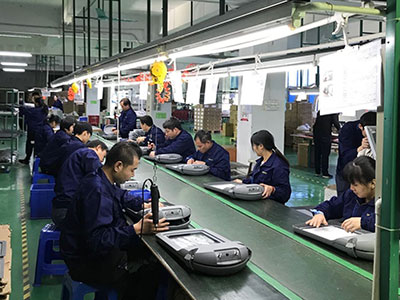
In this guide, you’ll get the real production stages a genuine LED factory runs, which parts of that process a buyer should verify directly, and the specific, documented facts about our own operation you can check against.
Why the Process Matters More Than the Factory Photos

Any supplier can post photos of a production floor — bright lighting, workers in lab coats, rows of equipment. What that photo can’t show you is whether the specific fixture you’re ordering actually went through every stage that determines its real-world reliability. Understanding the process gives you a checklist to ask about directly, rather than relying on how polished a supplier’s photos look.
What We Can Confirm About Our Own Operation
Before walking through the general process, here’s what’s actually documented about Sinocoled specifically, rather than general industry description: we operate our own foundry plant and assembly workshop in Shenzhen — vertical integration, as opposed to outsourcing assembly to a third party — and maintain a documented qualified-product rate above 99.99% over the long term. Quality verification runs through our self-built laboratory, which includes environmental testing such as temperature and humidity chamber testing, alongside our ISO9001, ISO13485, ISO14001, and ISO45001 certifications and product-level certification to TUV, CB, ENEC, CE, RoHS, SAA, PSE, UL, ETL, and DLC standards. We also work with named component partners — NICHIA and CREE for LED chips, MEAN WELL for drivers — rather than unbranded generic parts.
That’s the standard we hold ourselves to, and it’s exactly the kind of specific, checkable detail worth asking any LED light factory in China to provide — a documented qualified rate, named certification bodies, and named component brands, rather than a general “strict quality control” claim with nothing behind it.
Stage 1: Raw Material Sourcing and Component Selection
Before any assembly starts, a genuine factory sources LED chips, drivers, and housing materials. This is also where named-brand component sourcing matters — chips and drivers from established manufacturers (as opposed to unbranded, unverifiable sources) carry their own tested performance data, which a factory can pass along to you rather than asking you to trust an unverifiable in-house spec alone.
What to ask a supplier: Which LED chip and driver brands they actually use, by name, and whether they can provide that component manufacturer’s own datasheet alongside their fixture’s spec sheet. A supplier that won’t name their component brands is a reasonable point of hesitation.
Stage 2: SMT (Surface-Mount Technology) Placement
This is where LED chips are mounted onto the circuit board (PCB) using automated pick-and-place equipment, followed by reflow soldering to permanently bond the components. In a properly run line, automated optical inspection follows placement, checking for misaligned chips or solder defects before the board moves to the next stage.
Why this stage matters for buyers: A board assembled without an inspection step after placement can carry invisible defects — a slightly misaligned chip, a cold solder joint — that won’t show up in a quick power-on test but can cause premature failure months into field use. This is a general industry standard worth asking any supplier to confirm, since not every operation runs this check consistently.
Stage 3: Housing Fabrication
For outdoor and industrial fixtures, the housing is typically die-cast aluminum, forming the fixture’s structural shell and heat-sink geometry. Whether a supplier casts housings in-house or sources them from a third party is one of the clearest markers of vertical integration versus assembly-only operation — it’s the specific distinction our own foundry and assembly workshop setup reflects.
Why this matters: A factory controlling housing fabrication directly can match the heat-sink design to the LED array’s actual thermal output. An operation sourcing generic off-the-shelf housings has no control over whether that housing’s thermal design suits the fixture’s heat output — a factor directly tied to long-term lumen maintenance.
What to ask: Whether housing is fabricated in-house or sourced from a third party, and whether the design is specific to that fixture’s thermal requirements.
Stage 4: Potting and Encapsulation
This stage seals the driver compartment and critical electrical connections against moisture and dust ingress — directly determining the fixture’s actual IP rating performance in the field, not just on paper.
Why potting quality varies between factories: The potting compound, cure time, and how thoroughly it fills around connection points all affect real-world sealing performance. A rushed or under-filled potting job can carry an IP65 rating on a datasheet while underperforming that rating in actual outdoor conditions. An IP rating is only as reliable as the documented testing and certification body behind it — which is why checking which certification bodies (TUV, UL, ETL, DLC, etc.) actually tested a specific model matters more than the rating claim alone.
Stage 5: Assembly and In-Line Quality Checkpoints
Final assembly brings together the PCB, housing, driver, lens, and gasket. A properly run production line includes quality checkpoints at multiple points along this stage rather than a single inspection at the end — visual inspection at each major step, electrical testing on a sampling basis, and fastener torque verification, since under- or over-torqued seals directly affect IP performance.
Stage 6: Environmental and Reliability Testing
This is the stage we’d encourage every buyer to ask about specifically, because it’s where a factory actually demonstrates reliability rather than just claiming it.
What this looks like on our own floor: Our self-built laboratory runs environmental testing, including temperature and humidity chamber testing, as part of verifying fixtures hold up under the conditions they’ll actually face in the field — not just a quick power-on check before packaging.
What to ask any supplier: What specific testing equipment their lab actually has (a temperature/humidity chamber is a reasonable, checkable example), what their documented qualified-product rate is, and whether they can share real test data rather than a general claim of “rigorous testing.”
Stage 7: Final QC and Certification Verification
Before packaging, final quality control checks the finished fixture against the original specification. This is also the point where a legitimate factory’s certification claims should hold up to scrutiny — a product genuinely certified to UL, ETL, DLC, or CE standards will have a specific certificate number you can verify against the issuing body’s own database, not just a logo on a datasheet.
What to ask: For the specific certificate numbers behind any certification claim, and to verify them directly against the certifying body’s public listing.
Stage 8: Packaging for Export
The final stage accounts for the realities of international ocean freight — vibration, humidity, and handling during a multi-week transit. Proper export packaging includes individual unit protection, moisture-absorbing packets for humid transit routes, and carton strength rated for stacking across a full container load. Packaging failures are a frequently overlooked cause of units arriving damaged despite the fixture itself being well-manufactured.
What This Process Tells You About Evaluating a Supplier
None of these stages are secret or proprietary — a legitimate factory should be able to describe each one specifically when asked, ideally backed by documented, checkable facts rather than general reassurance. The real signal isn’t whether a supplier claims “strict quality control” — every supplier claims this — it’s whether they can give you a specific qualified-product rate, name their actual component brands, and point you to verifiable certificate numbers, the way we can for our own operation.
Common Mistakes Buyers Make When Evaluating a Factory’s Process
- Judging a factory by photos alone. Production floor photos confirm a facility exists; they don’t confirm which stages are actually performed on your specific order.
- Accepting “strict quality control” without a specific number behind it. Ask for a documented qualified-product rate, not a general claim.
- Not asking which LED chip and driver brands are actually used. Named component brands carry their own verifiable data; unbranded components don’t.
- Assuming an IP or safety rating on a datasheet reflects verified, current certification. Ask for the certificate number and check it against the issuing body’s database.
- Not asking whether housing is fabricated in-house or sourced generically. This affects thermal management and, ultimately, long-term lumen maintenance.
Frequently Asked Questions
What does vertical integration mean for an LED light factory in China?
It means the factory handles fabrication stages like housing casting and assembly in-house, rather than outsourcing to third parties and simply assembling purchased components. Sinocoled operates its own foundry and assembly workshop for exactly this reason.
What is a qualified-product rate and why does it matter?
It’s the documented percentage of units passing quality control over a given production run. A specific, stated figure (Sinocoled maintains above 99.99%) is far more meaningful than a general “strict QC” claim with no number behind it.
How do I know if a supplier actually performs in-house testing or just assembles pre-made components?
Ask what specific lab equipment they have (a temperature and humidity chamber is a concrete, checkable example), what their documented qualified rate is, and whether they can share real test data.
Does potting/encapsulation really affect IP rating performance?
Yes — an IP rating printed on a datasheet reflects a tested result, but real-world sealing performance depends on the actual potting process and the certification body that verified it, not just the rating claim itself.
Why does naming specific LED chip and driver brands matter?
Named components (Sinocoled uses NICHIA and CREE chips, MEAN WELL drivers) come with their own independently verifiable performance data. Unbranded or unnamed components offer no such external verification.
Final Thoughts: What a Real LED Light Factory in China Process Looks Like
Understanding the actual LED light factory in China production process gives you something far more useful than a supplier’s claim of being “a real factory” — a specific checklist of stages to ask about, each with a concrete, verifiable answer a genuine manufacturer should be able to give you without hesitation.
A documented qualified-product rate, named component brands, verifiable certificate numbers, and in-house fabrication capability are the specifics that consistently separate a real production operation from an assembly shop reselling someone else’s components under a different label. Ask about these specifically — the way we’ve laid out what’s verifiable about our own operation here — and you’ll learn more about a supplier in one conversation than any number of production-floor photos could tell you.