


Quick Summary (TL;DR)
- What this covers: Decoding the certifications you’ll actually see quoted by any LED lights manufacturer China — UL, ETL, DLC, CE, RoHS, ISO9001, ISO13485 — and how to verify each one isn’t just printed on a datasheet.
- The gap this fills: Most sourcing guides tell you “check for certifications” without explaining what each one actually covers, which markets require which, or how a fake certificate slips past a buyer who doesn’t know what to look for.
- The verification habit that matters most: Every legitimate certification has a public database or issuing body you can check the certificate number against directly — never take a PDF on a company’s website at face value.
- The certification most buyers misunderstand: CE marking is a self-declared conformity, not third-party tested by default — which changes how much weight it should carry compared to UL or ETL, which are third-party certified.
We keep seeing the same certification list get pasted into sourcing guides — “look for CE, RoHS, UL” — without any explanation of what those actually verify, who issues them, or how to catch a certificate that’s fabricated or expired. As a manufacturer that holds this exact certification stack, we know precisely where buyers get confused, and where the verification step actually happens. This guide breaks down each certification a serious LED lights manufacturer China should hold, market by market, plus exactly how to check that it’s real.
LED Lights Manufacturer China Certifications Explained
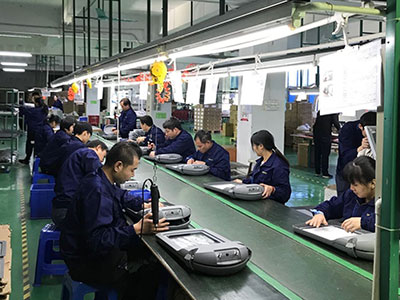

In this guide, you’ll get what each certification actually tests, which markets require it, and the exact verification step for each — so a certificate on a PDF isn’t the end of your due diligence; it’s the start.
Why “Just Check for Certifications” Isn’t Useful Advice
Telling a buyer to “verify certifications” without explaining the difference between a self-declared mark and a third-party tested one is close to useless — both look identical on a product page. The real skill is knowing what each certification actually claims to prove, and which ones come with an independent database you can check against. That’s the gap this guide fills.
Certification 1: CE Marking (Europe)
What it actually means: CE marking indicates the manufacturer declares the product meets applicable EU health, safety, and environmental protection standards. For most LED lighting products, this is a self-declared conformity — the manufacturer tests against the relevant standards (often via an accredited lab) and issues a Declaration of Conformity themselves, rather than a third party certifying it independently in every case.
Why this matters for buyers: CE marking is a legal requirement to sell in the EU, not evidence of superior quality on its own. A CE mark without a Declaration of Conformity document and underlying test report behind it is a weaker signal than most buyers assume.
How to verify it: Request the actual Declaration of Conformity (DoC) document, not just the logo. It should list the specific standards tested against (e.g., EN 60598 for luminaires) and the testing lab or basis for the declaration. If a manufacturer can’t produce this document on request, treat the CE mark with real skepticism.
Certification 2: RoHS (Restriction of Hazardous Substances)
What it actually means: RoHS restricts the use of specific hazardous materials (lead, mercury, cadmium, certain flame retardants) in electronic and electrical products sold in the EU, and increasingly required by other markets that have adopted similar standards.
How to verify it: Ask for the RoHS test report from an accredited lab, which will list the specific substances tested and the measured levels against the restricted thresholds. A generic “RoHS compliant” statement with no underlying report is not verification.
Certification 3: UL and ETL (North America)
What they actually mean: Both UL (Underwriters Laboratories) and ETL (Intertek) are third-party safety certifications — meaning an independent lab actually tests the product against safety standards, not the manufacturer self-declaring. This is a materially stronger signal than CE marking for exactly that reason.
Why the distinction matters: UL and ETL certification involves ongoing factory inspection as part of maintaining the certification, not just a one-time test. This is part of why these marks carry more weight in procurement decisions, particularly for government and municipal projects in North America that often specify UL or ETL listing as a hard requirement.
How to verify it: Both UL and Intertek (ETL) maintain public online databases where you can search a certified product by company name or certification number and confirm the listing is real and current. A manufacturer quoting UL or ETL certification should be able to give you the exact certification/file number to check — if they can’t, that’s a significant red flag.
Certification 4: DLC (DesignLights Consortium)
What it actually means: DLC is a performance-based qualification specifically for commercial and industrial LED lighting products in North America, verifying energy efficiency and photometric performance against defined thresholds. It’s distinct from safety certification — DLC is about efficiency and light quality performance, not electrical safety.
Why it matters for buyers: Many utility rebate programs in the US and Canada require DLC-listed products for a project to qualify for energy efficiency incentives. If a project’s budget depends on rebate eligibility, confirming DLC listing isn’t optional.
How to verify it: DLC maintains a public Qualified Products List (QPL) searchable by manufacturer and model. Cross-check the exact model number quoted against this list — DLC listings are model-specific, not company-wide, so one certified model doesn’t mean every product in a manufacturer’s catalog qualifies.
Certification 5: ISO 9001 (Quality Management)
What it actually means: ISO 9001 certifies that a manufacturer’s quality management system and processes meet an international standard — it’s a certification of process consistency, not a certification of any specific product’s performance.
Why it matters for buyers: It’s a reasonable baseline signal that a factory has documented quality control processes, but it says nothing about the actual electrical or photometric performance of the LED fixtures themselves. Treat it as a floor, not a differentiator.
How to verify it: ISO 9001 certificates are issued by accredited certification bodies (SGS, TÜV, Bureau Veritas, among others), and the issuing body’s own database can typically confirm an active certificate against the company name and certificate number.
Certification 6: ISO 13485 (Medical Device Quality Management)
What it actually means: This is a more specific and demanding quality management standard, originally built for medical device manufacturing. A manufacturer holding ISO 13485 alongside standard lighting certifications signals a quality system built to a stricter documentation and traceability standard than general ISO 9001 alone.
Why this is unusual and worth noting: Most general LED lighting manufacturers don’t hold ISO 13485, since it’s not required for standard street or industrial lighting. A manufacturer that holds it — often because they also produce light therapy or medical-adjacent devices — is signaling a quality management system built to a higher documentation bar than the lighting industry typically requires on its own.
How to verify it: Same approach as ISO 9001 — confirm through the issuing certification body’s database using the company name and certificate number.
Certification 7: TÜV
What it actually means: TÜV is a German testing and certification body (several regional TÜV organizations exist) that performs third-party safety and quality testing across a wide range of product categories, including electrical and lighting products.
How to verify it: TÜV-certified products typically carry a specific mark tied to a certificate number, and the relevant regional TÜV organization’s database can confirm the certificate’s validity.
Putting the Certification Stack Together by Target Market
- Selling into the EU: CE marking (with an actual Declaration of Conformity) and RoHS compliance are the baseline legal requirements.
- Selling into the US/Canada, especially government or utility-rebate projects: UL or ETL listing is often a hard requirement, and DLC listing is essential if the project depends on rebate eligibility.
- General quality assurance regardless of market: ISO 9001 is a reasonable floor; ISO 13485 is a positive signal of a stricter quality system, though not required for standard lighting products.
- Cross-market credibility: TÜV certification is recognized broadly and often requested by European and international buyers as an additional layer of third-party verification alongside CE.
Common Mistakes Buyers Make When Checking Certifications
- Treating a logo on a website as sufficient proof. Every certification listed above has an underlying document or database entry — request it.
- Not distinguishing self-declared (CE) from third-party tested (UL, ETL) certifications. Both look identical as a badge; they are not equivalent in what they actually prove.
- Assuming company-wide certification covers every product. DLC listings, in particular, are model-specific — the exact SKU needs to appear on the list, not just the company name.
- Skipping the verification database step entirely. Every certification in this guide has a way to check it independently — using it takes minutes and eliminates an entire category of sourcing risk.
- Not asking for the underlying test report behind RoHS and CE claims. A compliance statement without a report attached is not verification.
Frequently Asked Questions
What’s the difference between UL and CE certification?
UL is a third-party tested certification common in North America, involving independent lab testing and ongoing factory inspection. CE marking is typically a self-declared conformity to EU standards, which is a legal requirement for the EU market but not independently verified by default in the same way.
Is DLC certification the same as UL certification?
No — DLC verifies energy efficiency and photometric performance for utility rebate eligibility; UL verifies electrical safety. A product can hold one, both, or neither, and they answer completely different questions.
Why would an LED lighting manufacturer hold ISO 13485 if it’s a medical device standard?
Manufacturers that also produce light therapy or medical-adjacent devices sometimes maintain ISO 13485 alongside standard lighting certifications, signaling a quality management system built to a stricter documentation standard than general lighting manufacturing typically requires.
How do I check if a certification a manufacturer claims is actually real?
UL, ETL (Intertek), and DLC each maintain public, searchable databases by company name, model, or certificate number. ISO certifications can be verified through the specific issuing certification body’s own database.
Do I need every certification listed here from a single manufacturer?
No — the certifications you need depend entirely on your target market. A manufacturer selling only into the EU doesn’t need UL or DLC; one targeting US utility rebate programs needs DLC specifically, regardless of how many other certifications they hold.
Final Thoughts: What Certifications Actually Tell You About an LED Lights Manufacturer China
The real value of understanding this certification stack isn’t memorizing acronyms — it’s knowing which ones are independently verified and which are self-declared, and having the habit of actually checking the database behind each claim before an order goes out. A LED lights manufacturer China that holds a genuine certification stack will have no hesitation handing over certificate numbers, Declarations of Conformity, and test reports on request — that willingness is itself part of the verification.
If you take one habit from this guide, make it this: a badge on a website is a claim, not proof. Every certification covered here has a real, checkable record behind it, and spending the few minutes to check it is the cheapest due diligence step available in the entire sourcing process.