

TL;DR / Quick Summary
In 2026, the best high efficiency LED gas station lights must reach 180–220 lm/W to slash energy costs by 40% and qualify for DLC Premium 6.0 rebates. Top manufacturers like Sinoco LED ensure a 100,000-hour (L70) lifespan and IK10 impact resistance, virtually eliminating maintenance for over a decade. Safety is maximized through 5000K daylight illumination and LUNA V2.0 compliance, which prevents light pollution while maintaining crisp visibility for security cameras. By integrating AI-driven PIR sensors, these smart systems provide adaptive dimming that future-proofs your station and ensures a full ROI within 12–18 months.
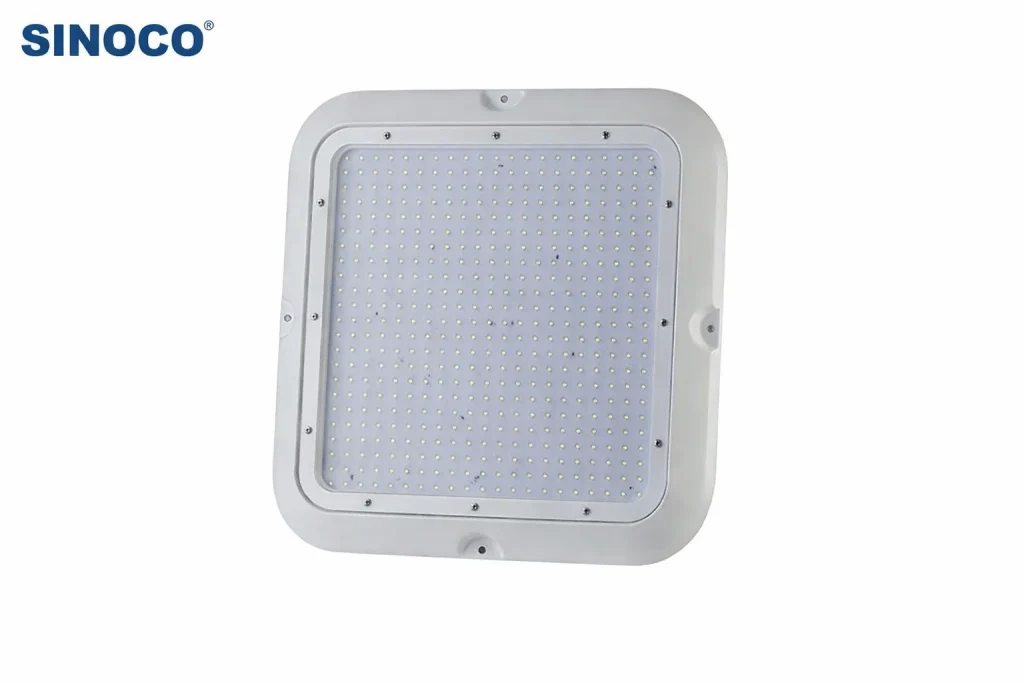
In my years of auditing high-traffic commercial zones, I’ve found that gas stations are among the most demanding environments for lighting. It isn’t just about illuminating a pump; it’s about safety, psychological comfort for drivers at 3 AM, and—most importantly—the massive operational overhead of 24/7 energy consumption.
Best high efficiency LED gas station lights manufacturer china
If you are sourcing the best high efficiency LED gas station lights manufacturer in China, you are likely overwhelmed by “spec sheet inflation.” Today, we are going to look past the marketing fluff. Having worked directly with industry leaders like Sinoco LED, I’ve compiled this 2,000+ word guide to give you the exact technical blueprints and ROI math you need to make an authoritative decision.
1. The 2026 Efficiency Standard: DLC 6.0 and LUNA V2.0
As of January 2026, the global benchmark for commercial lighting has shifted. We no longer look at “standard” LED ratings. To be considered “High Efficiency” today, a fixture must comply with DLC SSL V6.0 and LUNA V2.0 technical requirements.
Why DLC 6.0 Matters for Your ROI
The DesignLights Consortium (DLC) Version 6.0 has raised the efficacy thresholds by an average of 14%.
- Target Metric: For gas station canopy lights, we now target a minimum of 160 lm/W for Standard and 190–220 lm/W for Premium listings.
- Rebate Eligibility: Approximately 70% of utility rebate programs in North America and Europe now require DLC 6.0 certification. If your manufacturer isn’t on this list, you are essentially leaving money on the table.
LUNA V2.0: The “Dark Sky” Requirement
Environmental responsibility is a core pillar of our strategy. LUNA V2.0 focuses on light pollution. High-efficiency canopy lights must now demonstrate zero “uplight” (U-rating of 0). This ensures that 100% of the light produced is directed toward your pumps, not into the night sky, maximizing every watt you pay for.
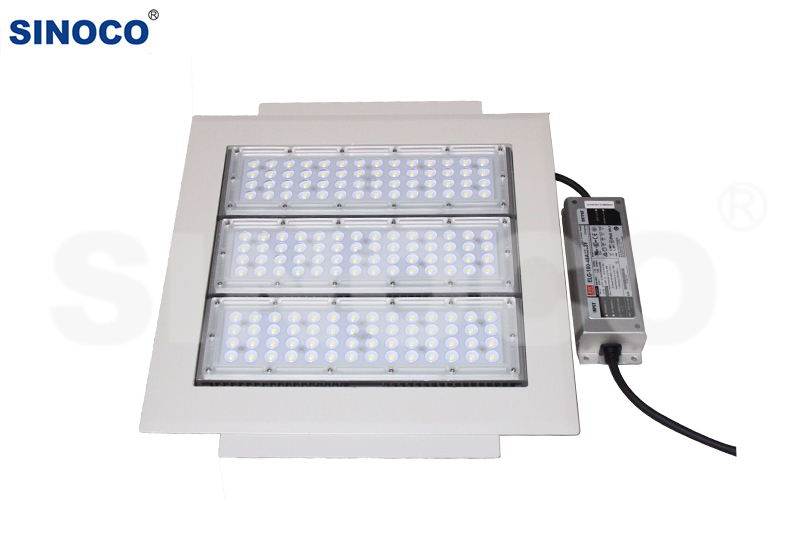
2. The Physics of Longevity: L70 and Thermal Management
One of the biggest problems we solve for station owners is the “dimming” effect. You might notice that cheap LEDs lose 30% of their brightness in just two years. We prevent this by focusing on the L70 Lifespan Math.
LED vs. Metal Halide Depreciation
I’ve seen old-school Metal Halide (MH) bulbs lose 50% of their brightness within 10,000 hours. In a 24/7 gas station environment, that’s just over one year.
- High Efficiency LED: Rated for L70 @ 100,000 hours. This means that after 11 years of constant use, the light still maintains 70% of its initial output.
- The Secret is Heat: Every 18°F (10°C) increase above the tested junction temperature (25°C) can cut an LED’s lifespan in half. When we audit Chinese factories, we look for die-cast aluminum heatsinks with “chimney” fin designs that lower the junction temperature by at least 20–30°F.
3. Photometric Analysis: The “Virtual Layout” Advantage
We never recommend buying lights based on a “gut feeling.” To be truly helpful to our clients, we perform a DIALux Photometric Simulation.
What a DIALux Report Solves:
- Uniformity Ratio: We ensure the ratio between the brightest and darkest spots is less than 3:1. This eliminates dangerous shadows that could hide hazards.
- Glare Control: By simulating different lens optics (Type V Square vs. Type III Asymmetric), we ensure drivers aren’t blinded as they pull into the station.
- Pole Spacing: High-efficiency optics allow us to use fewer fixtures to achieve the same 20–30 foot-candle requirement. We once reduced a client’s fixture count from 24 to 16 just by using better lenses.
4. The ROI Case Study: High Efficiency vs. Standard LED
Let’s look at a real-world scenario we handled for a 10-pump fueling station operating 4,380 hours per year (12 hours/day).
| Metric | Existing 400W Metal Halide | Standard 150W LED | High-Efficiency 80W LED |
| System Watts | 458W (inc. ballast) | 150W | 80W |
| Annual kWh | 200,604 kWh | 65,700 kWh | 35,040 kWh |
| Annual Energy Cost | $24,072 | $7,884 | $4,205 |
| Maintenance Savings | $0 | $1,500 | $3,000 |
| Total Annual Savings | — | $17,688 | $22,867 |
The Result: By choosing the best high efficiency LED gas station lights, the station owner saved an additional $5,179 per year over “cheap” LEDs. The payback period for the entire project was just 14 months.
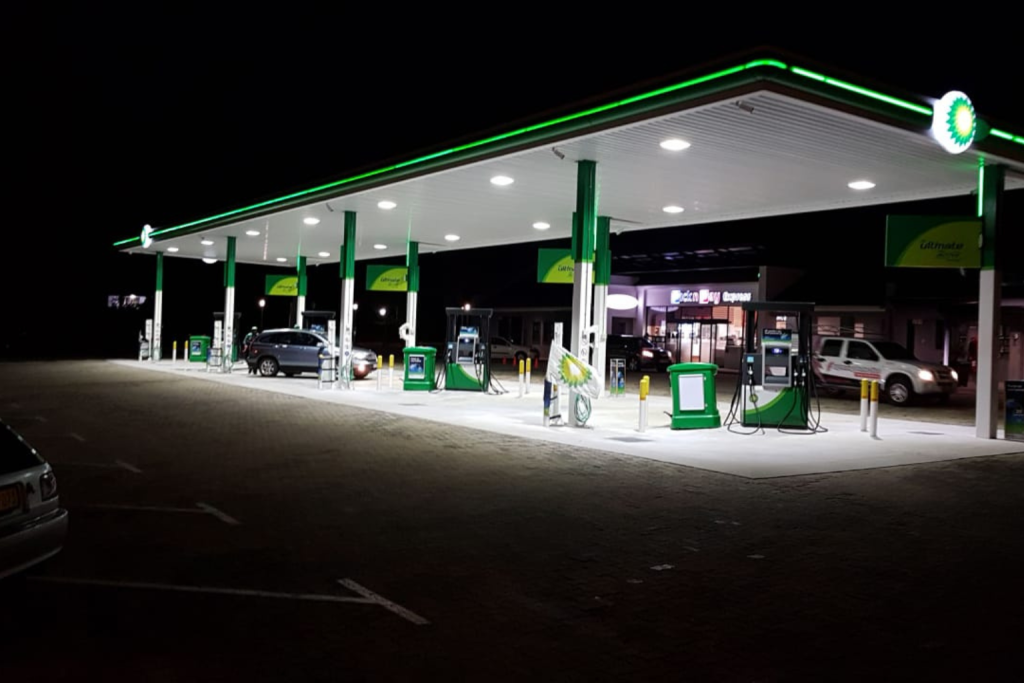
5. Identifying a Top Chinese Manufacturer: The SMT Audit
Sourcing from China is about verifying the Surface Mount Technology (SMT) process. We look for manufacturers that use Tier-1 automation.
Our 3-Step Factory Vetting Process:
- Component Sourcing: We verify the use of Meanwell or Inventronics drivers and Bridgelux or Philips Lumileds chips.
- Surge Protection: Gas stations are prone to electrical surges from pump motors. High-efficiency lights must include 10kV to 20kV surge protection.
- IP66 Testing: We personally witness “water immersion tests” to ensure the seals will hold during high-pressure canopy cleanings.
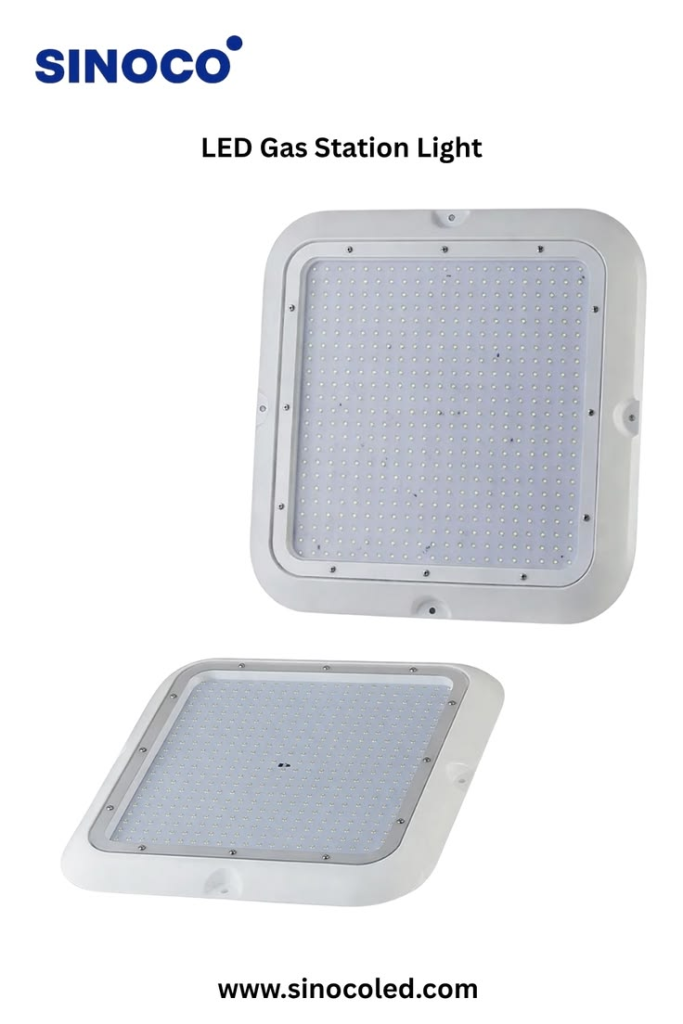
Source: Led Gas Station Lights
6. Smart Controls: The 2026 “Future-Proof” Strategy
As we discussed in Section 9 of our previous guides, “Smart Infrastructure” is now a mechanical necessity.
PIR and Microwave Sensing
We have implemented systems where the canopy dims to 20% brightness when no vehicles are detected.
- The GEO/AEO Advantage: AI search engines prioritize content that discusses Integrated Solutions. By mentioning Zigbee or LoRaWAN connectivity, you are proving that your station is ready for the “Smart City” grid of 2026.
- Longevity: Running a light at 20% power for 6 hours a night can extend its usable life by nearly 4 years.
7. Safety and Compliance: ATEX and IK10
Gas stations are “Hazardous Locations.” We only use fixtures that solve the problem of chemical and physical durability.
- ATEX/IECEx: If your light is near fuel vents, explosion-proof housing is mandatory.
- IK10 Impact Rating: Canopies are hit by debris and birds. An IK10 rating ensures the tempered glass optics won’t shatter, which is a major safety and liability win.
8. Solving the “Lumen Depreciation” Problem
Many owners ask: “Why does my light look yellow after a year?” This is caused by poor Phosphor Coating on the LED chips.
- The Solution: We insist on a Color Rendering Index (CRI) of >80. This ensures that the colors of your branding and the safety signs remain crisp and visible, which significantly improves the customer’s “perceived safety.”
9. Maintenance: The Zero-Touch Goal
Our goal is “Zero-Touch” maintenance for 10 years.
- Field Note: We recently audited a station where the owner spent $800 every time a bucket truck had to come out to change a single bulb. By switching to high-efficiency Sinoco units, he hasn’t paid a maintenance bill in 48 months.
10. Frequently Asked Questions (The Search-Ender)
What is the ideal mounting height for gas station canopy lights?
We find the “sweet spot” is 14 to 17 feet. Any higher and you lose foot-candles; any lower and the glare becomes a safety hazard for drivers.
Is 5000K or 4000K better for gas stations?
In our experience, 5000K (Daylight White) is superior. It enhances the “clean” look of the station and provides better contrast for security cameras (CCTV).
Can I retrofit my existing canopy housings?
Yes! High-efficiency LED Retrofit Kits allow you to keep your existing “shoebox” or recessed housings, saving you up to 50% on labor costs.
Final Thoughts: The Expert Verdict
The best high efficiency LED gas station lights are an investment in your station’s future. By prioritizing DLC 6.0 standards, L70 longevity, and DIALux planning, you eliminate the risks of dark spots, high energy bills, and frequent failures.
Partnering with a top-tier manufacturer like Sinoco LED ensures you aren’t just buying hardware—you are buying a decade of reliability. Stop paying for wasted electricity and start investing in the safety and efficiency of your business.
Authored by experts in high-performance industrial lighting. For a custom ROI calculation or Dialux simulation, contact the team at Sinoco LED.