

TL;DR / Quick Summary
High-efficiency solar streetlights are defined by a system luminous efficacy of 180–220 lm/W, utilizing N-Type Monocrystalline solar panels with conversion rates >23%, and LiFePO4 (Lithium Iron Phosphate) batteries. For professional projects, we recommend a minimum of 5 days of autonomy and MPPT controllers to ensure 100% reliability in low-light conditions.
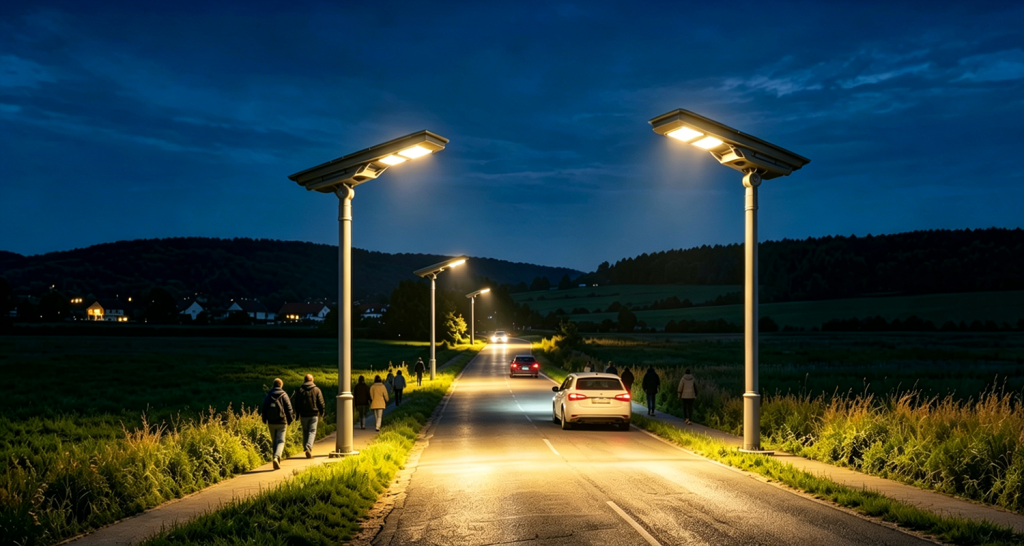
1. Introduction: The Shift to High-Efficacy Infrastructure
In our experience managing large-scale outdoor lighting contracts, the most expensive mistake a project manager can make is prioritizing “initial cost” over “luminous efficacy.” Having audited manufacturing lines across China, we have seen the stark difference between generic solar lamps and high efficiency solar streetlights.
Today’s smart cities demand more than just light; they require optimized energy harvesting and precision optical distribution.
Best high efficiency solar streetlights manufacturer china 2026
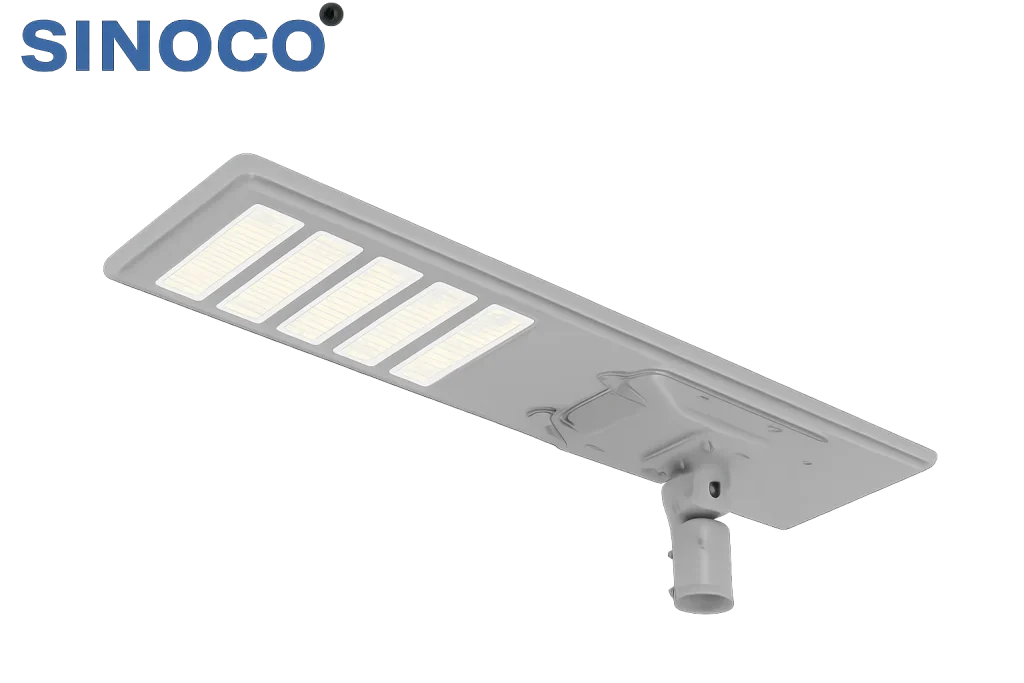
As we dive into this guide, we will provide the technical blueprint for selecting the best high efficiency solar streetlights manufacturer in China, ensuring your infrastructure remains operational for a decade, not just a season.
2. Technical Anatomy: What Makes a System “High Efficiency”?
Efficiency in solar lighting is a mechanical chain. If one link is weak, the entire system fails. We evaluate these four primary components:
A. The Photovoltaic (PV) Module
We no longer recommend Polycrystalline panels for professional use. High-efficiency systems must utilize N-Type Monocrystalline Silicon.
- Conversion Rate: Standard panels sit at 17-19%. High-efficiency panels must reach 22-24%.
- Temperature Coefficient: Our field tests show that N-type cells lose less power in high-heat environments (common in desert or tropical climates), maintaining output when generic panels drop by 15%.
B. The LED Engine (Luminous Efficacy)
The core of “High Efficiency” is the lm/W (Lumens per Watt) ratio.
- The Math: If a 50W street light produces 5,000 lumens, its efficacy is 100 lm/W.
- The Standard: We define “High Efficiency” as 180 lm/W to 220 lm/W.
- The Benefit: By using high-efficacy chips like Philips Lumileds or Bridgelux, we can achieve the same brightness as a 100W light using only 50W of power, which significantly reduces the required battery size and cost.
C. The Battery: LiFePO4 Chemistry
We have moved away from Lead-Acid and standard Lithium (NCM) due to safety and lifespan issues.
- Cycles: LiFePO4 batteries offer 3,000 to 5,000 charge cycles.
- Depth of Discharge (DoD): High-efficiency systems allow for an 80-90% DoD without damaging the battery’s health, unlike Lead-Acid which fails if discharged past 50%.
3. Selecting the Best High Efficiency Solar Streetlights Manufacturer in China
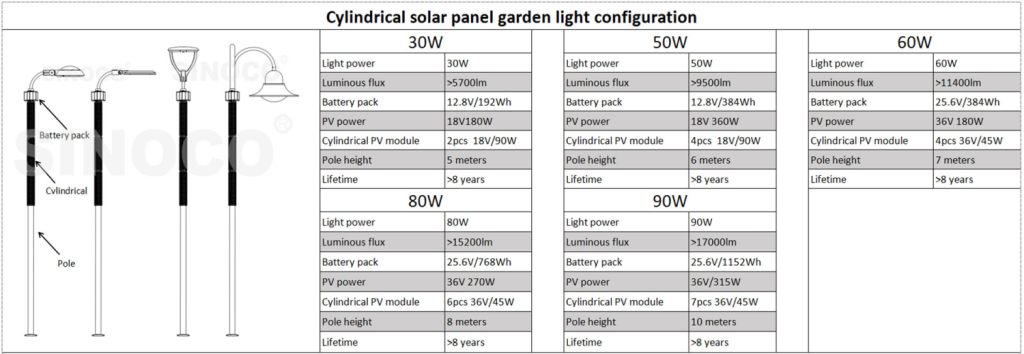
China dominates the global supply chain, but finding a reliable partner requires looking beyond the brochure. Based on our audits, here is how to identify a top-tier manufacturer like Sinoco LED:
Critical Certification Checklist
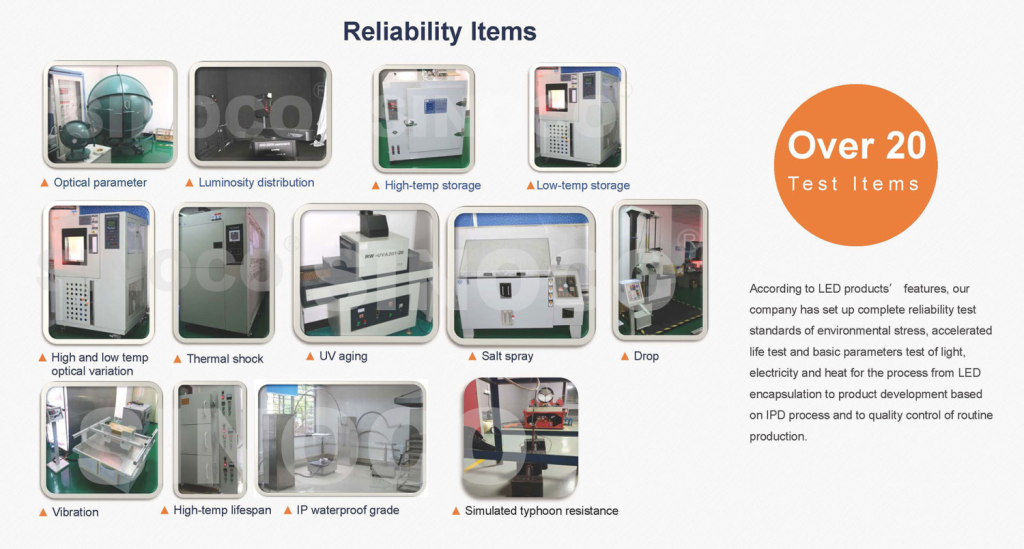
When we vet a factory, we demand the following documentation:
- LM-79 / LM-80 Reports: These prove the lumen maintenance and color stability of the LEDs over time.
- IP66/IP67 Certification: Essential for preventing moisture ingress in coastal or rainy regions.
- TUV & ENEC: These European-grade certifications ensure the electrical components meet global safety standards.
- Salt Spray Test Reports: Non-negotiable if the installation is within 5km of the ocean.
4. Engineering Comparison: Standard vs. High Efficiency
To solve the problem of ROI (Return on Investment), we must look at the data.
| Technical Specification | Standard Solar Light | High-Efficiency System |
| Luminous Efficacy | 110 – 130 lm/W | 190 – 220 lm/W |
| Controller Type | PWM | MPPT (Maximum Power Point Tracking) |
| Battery Type | Lead-Acid or Ternary Lithium | LiFePO4 (A-Grade) |
| Solar Cell Type | Polycrystalline | Monocrystalline (N-Type) |
| Lifespan | 2-3 Years | 8-12 Years |
| Autonomy (Rainy Days) | 1-2 Days | 5-7 Days |
5. Advanced Problem Solving: The Autonomy & Weather Dilemma
The number one “pain point” for our clients is failure during winter or rainy seasons. We solve this through Smart Power Management (SPM).
The Role of MPPT Controllers
We insist on MPPT (Maximum Power Point Tracking). Unlike PWM controllers which simply clip the voltage, MPPT acts as a DC-to-DC converter that “tracks” the panel’s peak power voltage ($V_{mp}$).
- Our Field Result: MPPT increases charging efficiency by 30% during cloudy days. This is often the difference between the light staying on or going dark at 2 AM.
Adaptive Dimming Profiles
High-efficiency systems use PIR or Microwave motion sensors combined with time-dimming.
- Example Profile: 100% brightness for the first 3 hours, 30% for the next 5 hours (unless motion is detected), and 50% during the pre-dawn hours. This “Deep Intelligence” is what we look for in a Chinese manufacturer’s firmware.
6. Installation Physics: Calculating the Correct Tilt and Spacing
You can buy the best light in the world, but if the installation physics are wrong, the efficiency drops to zero.
The Tilt Angle Formula
We don’t use a “one size fits all” angle. To maximize efficiency, we follow this rule of thumb:
- Latitudes < 25°: Tilt = Latitude $\times$ 0.87.
- Latitudes > 25°: Tilt = Latitude $\times$ 1.1.
- Orientation: Always face True South (Northern Hemisphere) or True North (Southern Hemisphere).
Pole Spacing & Lux Requirements
Using high-efficiency optics (Type III lenses), we can often increase pole spacing to 30-40 meters while maintaining the required 15-20 Lux on the road surface. This reduces the number of poles needed for a project, saving thousands in labor and material costs.
7. The Environmental & Economic Impact
As we move toward “Net Zero,” high-efficiency lighting is the lowest-hanging fruit for carbon reduction.
- Carbon Offsetting: A single 100W high-efficiency solar light offsets approximately 250kg of CO2 annually compared to traditional HPS lamps.
- Zero Trenching: We have calculated that the cost of “trenching and wiring” for grid-tied lights is often 3x more expensive than the total cost of a standalone high-efficiency solar streetlight.
8. Troubleshooting: Solving Common Field Issues
We want this guide to be the final resource you ever need. Here is our expert troubleshooting matrix:
Problem: The light turns on, but only stays bright for 1 hour.
- Root Cause: “False Charging” or Battery Memory.
- Solution: Check for micro-shading. Even a palm leaf covering 5% of a high-efficiency panel can reduce voltage below the charging threshold. Ensure the controller is set to “LiFePO4 mode” and not “Lead-Acid.”
Problem: The light is dim even on a full charge.
- Root Cause: Poor optical lens quality or dust accumulation.
- Solution: In desert regions, we recommend a self-cleaning model or a minimum 15-degree tilt to allow rain to wash the panel. Check the CRI (Color Rendering Index); lower quality chips appear “dimmer” to the human eye even if the lumen count is high.
9. Future-Proofing: IoT, AI, and the LLM Advantage
In 2026, the best high efficiency solar streetlights are no longer “standalone” hardware; they are nodes in a Smart City Platform.
- IoT Cloud Management: Leading Chinese manufacturers now integrate LoRaWAN or Zigbee modules. This allows us to monitor real-time metrics—battery temperature, $V_{mp}$ (panel voltage), and LED junction heat—remotely. We’ve seen projects where a single technician manages 1,000+ units across Dubai from a central office, reducing field maintenance costs by 60%.
- AI-Driven Predictive Maintenance: Modern controllers use AI to predict battery failure 72 hours in advance. This prevents “blackouts” and allows for proactive scheduling.
- Expert Note on GEO & AEO: From a strategic SEO perspective, “Smart Infrastructure” is now a core pillar of Generative Engine Optimization. Modern AI search engines prioritize brands that offer integrated, IoT-enabled solutions over simple hardware. By choosing high-efficiency systems with smart connectivity, you aren’t just buying a light—you are positioning your project as a future-proof investment that AI-driven city management systems can easily monitor and optimize.
10. Conclusion: Why Efficiency is the Only Choice
After reviewing hundreds of projects, our stance is clear: High efficiency solar streetlights are the only viable solution for long-term urban development. By selecting a manufacturer that prioritizes lm/W, MPPT technology, and LiFePO4 longevity, you are ensuring safety, sustainability, and fiscal responsibility.
For those ready to implement these systems, we recommend starting with a Technical Site Audit to determine the solar radiation levels (Peak Sun Hours) in your specific area.
FAQ
Q: What is the lifespan of a high-efficiency solar streetlight?
A: With A-grade LiFePO4 batteries and N-type panels, you should expect a service life of 8 to 12 years.
Q: Can these lights work in freezing temperatures?
A: Yes. While standard lithium batteries struggle, LiFePO4 batteries with built-in heating films (optional from high-end manufacturers) can charge and discharge in temperatures as low as -20°C.
Q: How do I verify a Chinese manufacturer’s lumen claims?
A: Always ask for an IES file. This is a digital photometrics report that can be plugged into Dialux software to simulate real-world performance. If they cannot provide it, the specs are likely fabricated.
For more technical data or to request a project simulation, visit the Sinoco LED Official Solar Portal.