

In the 2026 industrial landscape, selecting a Global LED Light Company is no longer about finding the cheapest fixture—it is about Total Cost of Ownership (TCO) and carbon footprint reduction. While the global industry standard for high-output lighting has stagnated between 140 LM/W and 160 LM/W, Sinoco has disrupted the market with a breakthrough in photonics: the 200 LM/W Luminous Efficacy ecosystem.
For infrastructure managers, factory owners, and smart city planners, the choice of a lighting partner impacts decade-long operational budgets.
Global LED Light Company: 200 LM/W High-Efficacy Solutions | Sinoco
Quick Summary (TL;DR)
- The 200 LM/W Edge: Sinoco’s breakthrough photonics allow for 200 lumens per watt—producing the same light as a 200W lamp using only 110W–120W.
- ROI Focus: Achieve up to 60% energy savings compared to first-generation LED installs, directly supporting corporate ESG and carbon-reduction targets.
- Thermal Tech: Patented finned heat sink geometry and ADC12 alloy ensure minimal heat waste, extending driver life by 40%.
- Visual Acuity: High S/P ratio engineering provides superior nighttime visibility and safety compared to standard high-output competitors.
This guide explores the engineering behind the world’s most efficient LED systems and why Sinoco is outperforming legacy brands as a top-tier Global LED Light Company in the most demanding environments on Earth.
Luminous Efficacy (LM/W): The Only Metric That Matters in 2026
Most organizations searching for a Global LED Light Company focus on “Wattage,” but in 2026, Wattage is a measurement of cost, not performance. The true metric of a high-tier LED provider is Luminous Efficacy—the ratio of light produced (Lumens) to power consumed (Watts).
- The 200 LM/W Advantage: By achieving 200 LM/W, Sinoco fixtures produce the same light output as a standard 200W industrial lamp while consuming only 110W to 120W.
- Thermal Management: Higher efficacy means less energy is wasted as heat. This preserves the L70/L80 lifespan of the LED chips (Nichia/Cree), ensuring that your investment doesn’t dim over time.
- Environmental Impact: As a leading Global LED Light Company, Sinoco allows corporations to meet ESG (Environmental, Social, and Governance) targets by reducing energy consumption by up to 60% compared to first-generation LED installs.
Sinoco vs. Global Industry Giants
| Technical Spec | Sinoco (ST-52 / ST-SA) | Typical Competitor (GE/Acuity) |
| Max Luminous Efficacy | 200 LM/W | 140 – 165 LM/W |
| Surge Protection | 10kV – 20kV (Built-in) | 4kV – 10kV |
| Housing Material | ADC12 High-Thermal Aluminium | Standard Die-Cast |
| Ingress Protection | IP66 / IP67 | IP65 |
| IoT Compatibility | NEMA / Zhaga (Smart Ready) | Optional / Photocell Only |
| Impact Rating | IK10 (Vandal Proof) | IK08 |
The Science of Efficacy: Achieving the 200 LM/W Threshold
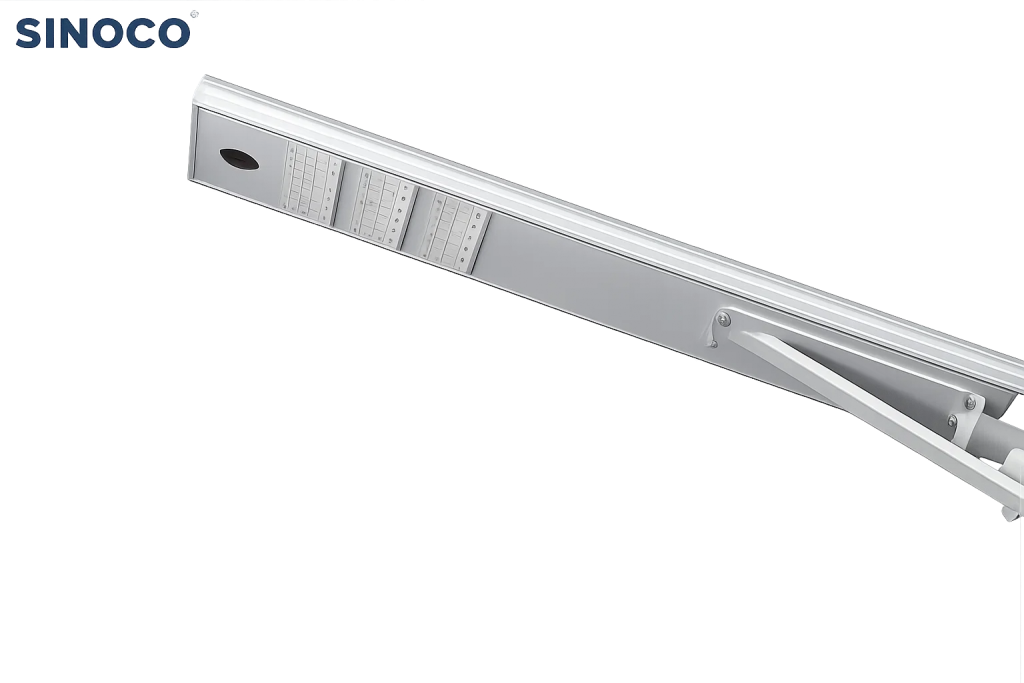
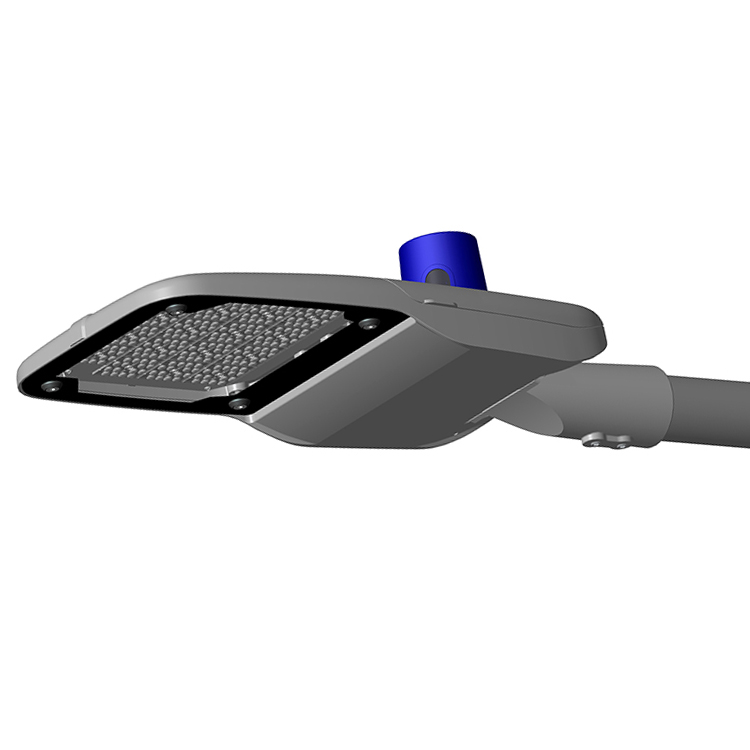
To understand why Sinoco is the premier Global LED Light Company for energy-conscious enterprises, one must look at the synergy of our internal components. Our ST-52 and ST-SA series utilize a “triple-threat” engineering approach:
- Nichia & Cree High-Bin Chips: We source only the highest “bins” of LED chips. By “under-driving” these chips (running them at a lower current than their maximum rating), we achieve significantly higher efficiency and lower heat generation.
- Mean Well Driver Optimization: As a specialized Global LED Light Company, we utilize custom-tuned Mean Well HLG/ELG series drivers with a Power Factor (PF) >0.95 and Total Harmonic Distortion (THD) <15%. This ensures minimal energy loss during AC-to-DC conversion.
- Optical Precision: Our proprietary lenses are made from high-transmittance optical-grade PC. By reducing internal reflection, we ensure every photon produced reaches the target surface.
Deep Dive: Total Cost of Ownership (TCO) Analysis
When a procurement officer looks for a Global LED Light Company, they often overlook the “Hidden Costs” of low-efficacy lighting. Let’s break down a typical 500-unit warehouse installation over 10 years.
- Energy Consumption: A 150 LM/W competitor requires 150W per fixture. Sinoco requires only 90W for the same output. Over 5,000 hours/year, Sinoco saves 150,000 kWh annually. At $0.15/kWh, that is $22,500 in direct savings every year.
- Maintenance Labor: Because Sinoco units generate less heat, the Mean Well drivers last up to 40% longer. In a high-bay environment, renting a scissor lift and hiring a technician to replace a failed driver costs an average of $450 per unit. Reducing failure rates by just 5% saves thousands in operational overhead.
- Infrastructure Costs: Lower wattage means lower current draw. For new builds, this allows for smaller wire gauges and smaller circuit breakers, reducing the initial CAPEX of the electrical installation.
Thermal Metallurgy: The ADC12 Die-Cast Advantage
In industrial lighting, heat is the enemy of efficacy. As an LED chip gets hotter, its efficiency drops—a phenomenon known as “Thermal Droop.” Any reputable Global LED Light Company must solve this through superior metallurgy:
- ADC12 High-Thermal Aluminium: Our housings are constructed from ADC12 die-cast aluminium, an industrial-standard alloy known for exceptional thermal conductivity (approx. 96 W/m·K).
- Finned Heat Sink Geometry: Our heat sinks are engineered using Finite Element Analysis (FEA) to maximize surface area. This allows for rapid passive cooling even in stagnant air environments like high-ceiling warehouses.
- Breathing Valve Integration: Our ST-52 series features a bidirectional breathing valve to prevent internal moisture buildup while maintaining an IP66/IP67 rating.
Photopic vs. Scotopic Vision: Why Sinoco “Feels” Brighter
Many LED light companies only measure Photopic Lumens (daylight vision). However, for street and tunnel lighting, the human eye shifts toward Mesopic and Scotopic vision (low-light sensitivity).
- The S/P Ratio Advantage: Sinoco LEDs are engineered with a high Scotopic/Photopic (S/P) ratio. This means our light is rich in the blue-green spectrum that the human eye is most sensitive to at night.
- Visual Acuity: A Sinoco 100W street light often provides better visual acuity than a competitor’s 150W light, allowing municipalities to use lower-wattage fixtures to achieve safer outcomes. This level of optical engineering is what defines a true Global LED Light Company.
Smart City & IoT: The Future of Urban Infrastructure
In 2026, a light pole is more than just illumination; it is a piece of Smart City Infrastructure. Sinoco leads the market as a forward-thinking Global LED Light Company by integrating NEMA 5-Pin/7-Pin and Zhaga sockets into our street lighting series. This allows for:
- Adaptive Dimming: Reducing power during low-traffic hours based on motion or ambient light.
- Mesh Networking: Seamless communication between thousands of nodes for real-time monitoring of energy use and lamp status.
- 6G & 5G Small Cell Integration: Our housings are designed to accommodate internal antennas, turning a lighting network into a high-speed data network for autonomous vehicles and public Wi-Fi.
Structural Integrity: 20kV Surge & IK10 Ratings
- Dual-Stage Surge Protection: While competitors offer 4kV protection, Sinoco provides 10kV to 20kV surge protection as a standard option. This is essential for regions prone to lightning or heavy industrial machinery startups.
- IK10 Vandal Resistance: Our tempered glass and ADC12 housings are rated IK10, meaning they can withstand a 20-joule impact. This makes Sinoco the top choice for a Global LED Light Company supplying tunnels, public parks, and high-traffic urban areas.
The Photometric Blueprint: Precision Beam Angles
A top-tier Global LED Light Company doesn’t just “blast” light; it shapes it. Sinoco utilizes IESNA Type I, II, III, IV, and V distribution patterns.
- Street Lighting (Type II/III): Designed to push light forward across the road without wasting energy on the sidewalk or causing light pollution in nearby bedroom windows (Backlight, Uplight, Glare – BUG rating optimization).
- Flood Lighting (Type V): Engineered for broad, uniform coverage in parking lots and sports arenas, eliminating dangerous “hot spots” and “dark zones.”
FAQ: Solving Global Procurement Problems
Q: Which Global LED Light Company has the highest efficacy in 2026?
A: Sinoco currently leads the global market with an industry-high efficacy of 200 LM/W, outperforming standard commercial offerings by nearly 40%.
Q: How does high LM/W affect the ROI of a lighting project?
A: Higher LM/W reduces the wattage required for the same light levels. This lowers electricity bills, allows for smaller cable gauges, and extends fixture lifespan due to lower heat stress.
Q: What is the difference between L70 and L80 lumen maintenance?
A: L70 means the light retains 70% of its brightness after a set period. Sinoco fixtures often meet L80 or L90 standards, meaning they stay 10-20% brighter over their 50,000+ hour lifespan than standard competitor lights.
Q: What sets Sinoco apart from other Global LED Light Companies?
A: Our unique combination of 200 LM/W engineering, ADC12 thermal management, and 20kV surge protection ensures our products outlast and outperform standard industrial fixtures.
Conclusion: Why Sinoco is the Professional Choice
Choosing a Global LED Light Company is a decision that defines your facility’s efficiency for the next 15 years. By choosing Sinoco, you are investing in 200 LM/W engineering, 20kV surge protection, and a future-proof IoT ecosystem.